
Best Roofing Materials for Grand Rapids Weather (Ice Dams, Snow & Wind)
Grand Rapids roofs take a beating every winter. Lake-effect snow piles up. Freeze-thaw cycles crack weak materials. Strong winds rip shingles off. Homeowners in Eastown, Alger Heights, Cascade, and across Kent County ask us the same question: Which roofing material holds up best here?
In our 12 years serving Grand Rapids, we have replaced and repaired hundreds of roofs after heavy snow and wind events. We see what lasts and what fails. This guide compares the main options—asphalt, architectural, metal, and impact-resistant—so you can pick the right one for your home. Visit roofing in Grand Rapids to learn more about our local roofing services.
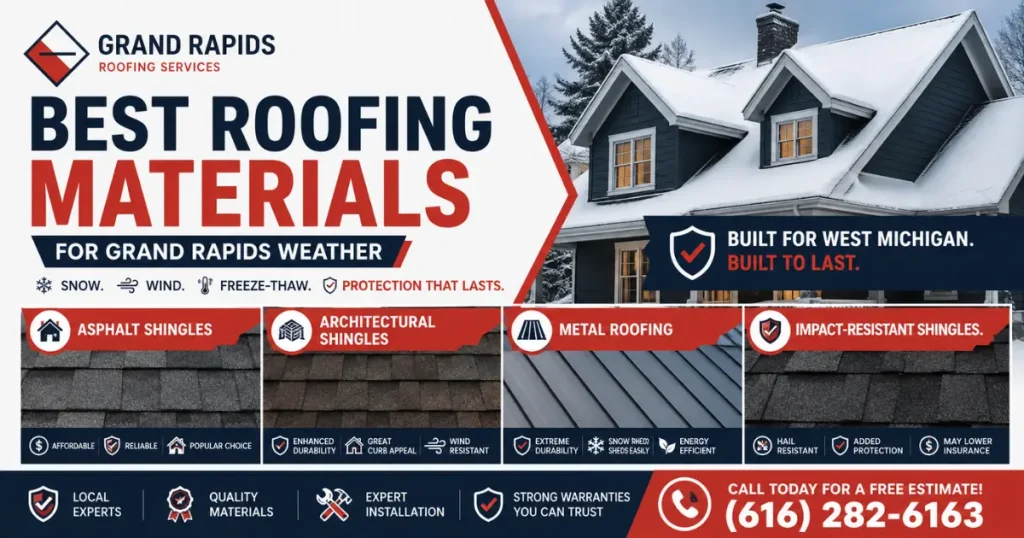
Why Grand Rapids Weather Demands Strong Roofing
Michigan winters hit hard. Lake Michigan sends lake-effect snow that can dump inches overnight. Temperatures swing above and below freezing for weeks. Water seeps into small gaps, freezes, and expands. That creates ice dams along the eaves. High winds, especially during spring and fall storms, test every shingle and seam.
Homes in neighborhoods like Eastown and Alger Heights often sit on older roofs that were never built for this cycle. Newer builds in Cascade face the same weather but start with better materials. The right choice cuts repair calls and protects your attic from leaks.
Standard Asphalt Shingles
Asphalt shingles remain the most common choice in Grand Rapids. They cost less upfront and install fast. Most homes we work on still have them.
How they handle local weather
Basic 3-tab asphalt shingles struggle with ice dams and wind. The thin material can crack in freeze-thaw cycles. Snow sits on the surface and melts unevenly. Wind uplift ratings sit lower than other options. In a strong storm, edges lift, and water gets under.
Pros for Grand Rapids homes
- Lowest material cost
- Easy to match existing roofs in older neighborhoods
- Plenty of local stock
Cons
- Shorter lifespan in lake-effect snow areas (often 15–20 years)
- Higher chance of ice dam damage
- Wind can tear tabs during big storms
We still install them on budget projects, but we warn homeowners in high-exposure spots. For better results, most people move up to architectural styles.
Architectural Shingles
Architectural (or dimensional) shingles use thicker layers and a heavier weight. They look like wood shake from the street and perform better than basic asphalt.
Performance in snow, ice, and wind
The extra thickness resists cracking better during freeze-thaw. Many carry higher wind ratings—up to 110–130 mph when installed correctly. They shed snow more evenly than thin 3-tabs. Ice dams still form if attic ventilation is poor, but the shingles themselves hold up longer.
Local pros
- Good balance of cost and strength for Kent County winters
- Better curb appeal in Eastown and Cascade
- Warranties often reach 30–50 years
Local cons
- Still asphalt, so prolonged ice can damage the edges
- Heavier than 3-tab, so older roofs may need decking checks
In our experience, architectural shingles handle most Grand Rapids winters well when the attic is ventilated, and the ice-and-water shield is installed along the eaves. We recommend them for the majority of residential jobs.
Popular brands we use:
- GAF Timberline
- Owens Corning Duration
- CertainTeed Landmark
These lines meet or exceed local wind and impact needs when properly installed.
Metal Roofing
Metal roofs have grown popular in Grand Rapids for good reason. Standing-seam or screw-down panels shed snow fast and resist wind better than most shingles.
How metal fights lake-effect snow and wind
Snow slides off metal roofs instead of piling up. That reduces ice dam risk. The material expands and contracts with temperature swings without cracking. High wind ratings are common—many systems handle 140 mph or more. Impact from falling branches is less of a problem on thicker gauges.
Pros for our climate
- Excellent snow shedding
- Long lifespan (40–70 years)
- Low maintenance after install
- Strong against wind uplift
Cons
- Higher upfront cost
- Noise during heavy rain or hail (though underlayment helps)
- Needs experienced installers—poor flashing leads to leaks
We see metal roofs perform well on homes in Cascade and open areas of Kent County where wind hits harder. They also work on commercial buildings that need long-term protection. For homeowners who plan to stay 20+ years, metal often costs less over time.
Recommended systems include standing-seam panels from established manufacturers. We match the panel profile and finish to the home’s style so it looks right in Grand Rapids neighborhoods.
Impact-Resistant Roofing
Impact-resistant shingles (often Class 4) use special polymers or reinforced mats. They resist hail and falling debris better than standard asphalt.
Fit for Grand Rapids weather
Hail is less common than snow and wind here, but strong storms still bring debris. Impact-resistant products also tend to carry higher wind ratings. The tougher surface handles freeze-thaw cycles with less cracking. Some lines qualify for insurance discounts in Michigan.
Pros
- Stronger against storm damage
- Often higher wind ratings
- Potential insurance savings
- Longer warranties on many brands
Cons
- Cost more than standard architectural
- Still need proper ice-and-water protection at the eaves
We install impact-resistant options when homeowners want extra protection or when their insurance company encourages it. Brands such as CertainTeed’s impact lines and GAF’s ArmorShield series perform well in our climate. They pair nicely with good attic ventilation and proper underlayment.
Key Factors We Check on Every Grand Rapids Job
Material is only part of the equation. In 12 years, we have learned that these details matter just as much:
- Ice-and-water shield along the eaves and valleys stops water from ice dams.
- Proper attic ventilation keeps the roof deck cold and reduces melting.
- Secure fastening for high-wind areas.
- Flashing around chimneys, vents, and skylights.
A strong material with weak installation still fails. That is why we inspect the full roof system before recommending a product. You can learn more about the full process on our Roof Replacement page.
Choosing the Right Material for Your Home
Walk your neighborhood in Eastown, Alger Heights, or Cascade, and you will see a mix of asphalt, architectural, and the occasional metal roof. The homes that stay driest after big snow events usually have three things in common: solid material, proper ice protection, and good attic airflow.
In our 12 years serving Grand Rapids and Kent County, we have installed all four types. We match the product to the house, the budget, and the weather exposure. If you want a free look at your roof and clear recommendations, reach out. We will tell you what will last here—not just what sells.
Ready for the next step? Visit our Roof Replacement in Grand Rapids page or request a free estimate. We also handle emergency roof repair and storm damage when weather takes its toll.
Your roof has one job: keep Grand Rapids weather outside. Pick materials that do that job year after year.
Real Questions Homeowners Ask Us
Does metal make sense for an older Grand Rapids home?
Yes, if the structure can support the weight and the budget allows. We evaluate the decking first.
Will architectural shingles stop ice dams?
They help, but ventilation and ice-and-water shield do most of the work. Material alone is not enough.
Are impact-resistant shingles worth the extra cost?
They are if you want higher wind ratings or possible insurance benefits. For pure snow and freeze-thaw, quality architectural often performs close enough.
How long will a new roof last here?
It depends on the material, installation, and maintenance. We give realistic ranges based on what we see locally, not just manufacturer claims.
What is the best roofing material for heavy snow in Grand Rapids?
Metal sheds snow best. Quality architectural and impact-resistant shingles also perform well when paired with good ventilation and ice protection.
Do I need a special underlayment for Michigan winters?
Yes. We use ice-and-water shield in the critical areas and a strong synthetic underlayment across the rest of the roof.
Can I switch from asphalt to metal?
Yes. Many homeowners do. We check the structure and adjust flashing and ventilation as needed.
How do I know if my current roof can handle another winter?
Look for missing shingles, soft spots, or water stains in the attic. Schedule an inspection before the first heavy snow.